
Manufacturing & Quality Process
FireSmart designs and manufactures its fire alarm control panels, detectors, sounders and fire-transmission devices in Vietnam, with in-house product engineering going back to 2015. Every product line is built domestically rather than sourced as a rebadged overseas unit, which lets the same engineering team carry a design from first prototype through to the compliance checks required before it can be sold.
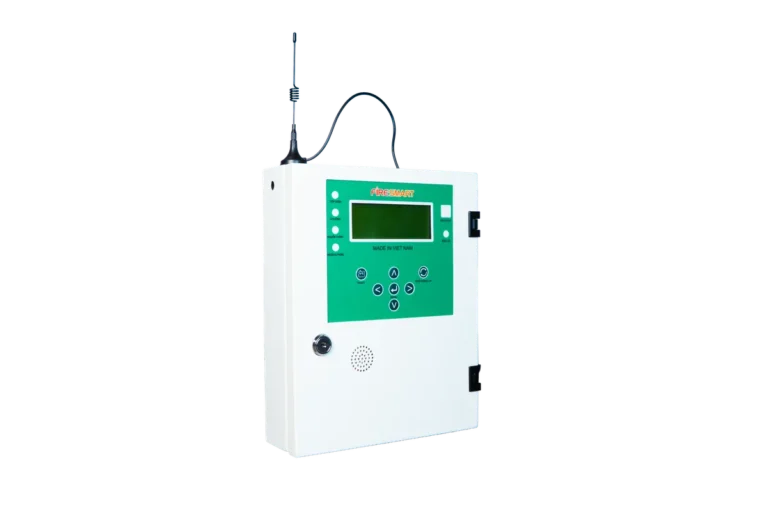
Designed for the conditions it will actually run in
FireSmart’s home market is Vietnam, so heat, humidity and dust are treated as a baseline design constraint rather than an edge case discovered later. Control panels and detectors built for wireless, retrofit-style installation are engineered to keep working in older buildings, tropical climates and dusty industrial spaces where a system can’t be taken offline for maintenance without disrupting the building. That same starting point carries through to every export market FireSmart enters — the hardware doesn’t need to be redesigned for a hot, humid climate, because it was never designed for anything else.
Quality and reliability built into the hardware
Several of FireSmart’s quality controls are things the equipment does on its own, continuously, after installation — not just a one-time check before it leaves the factory:
- Wiring fault supervision (EOL). Conventional FCP and FSP control panels monitor every detector zone for open-circuit and short-circuit wiring faults automatically, so a damaged cable shows up as a fault on the panel instead of silently disabling a zone.
- Confirmed alarm delay. Panels apply a short, fixed confirmation window — 20 seconds — before raising a full alarm, which cuts down on nuisance trips without meaningfully slowing a genuine fire signal.
- Event logging. FSP panels retain a history of up to 8,000 events, so a technician or building manager can review exactly what the system did, and when, during a maintenance visit or after an incident — not just what it’s doing right now.
- Transmission verification. FCOM fire-transmission devices confirm that an alarm signal was actually received before treating the job as done, and continuously self-monitor both of their communication paths so a dropped connection is reported as a fault rather than failing silently — built to the transmission-verification requirement in TCVN 14538:2025.
The 20-second confirmation delay is a good example of why some of these controls are fixed rather than adjustable: it can be shortened for a site with unusually fast-developing fire risk, but it is never left open for a technician to disable per zone at commissioning, because the fastest way to get an entire system disconnected by a frustrated building manager is one too many false alarms in its first month.
Compliance check before a product can be sold
Before any FireSmart fire alarm product line reaches the market, it has to be manufactured to conform to TCVN 7568-14:2025, Vietnam’s national technical standard for fire detection and alarm systems. Meeting that standard is what allows the product to hold a Giấy phép lưu thông (Certificate of Circulation), issued by the Fire Police and Rescue Department (Cục Cảnh sát PCCC & CNCH) under Vietnam’s Ministry of Public Security, in line with Decree 105/2025/NĐ-CP. That certificate is what actually permits the equipment to be sold and installed in Vietnam — it is a regulatory gate every product line has to pass, not a marketing label.
Extending the same checks to export markets
As FireSmart expands into new markets, the same equipment starts from Vietnam’s requirements but still has to clear each destination market’s own certification and radio type-approval process before FireSmart represents it as compliant there. That work is in progress on more than one country track at once — full country-by-country status, including which approvals are complete and which are still pending, is kept up to date on the Certifications & Compliance page rather than repeated here.
Frequently asked questions
Does FireSmart manufacture its own equipment, or resell an overseas brand?
FireSmart designs and manufactures its own control panels, detectors, sounders and fire-transmission devices in Vietnam; none of the product range is a rebadged overseas product.
What standard governs FireSmart’s fire alarm equipment in Vietnam?
TCVN 7568-14:2025, Vietnam’s current national standard for fire detection and alarm systems. Compliance with it is required before a product can receive its Giấy phép lưu thông (Certificate of Circulation).
Is FireSmart certified for the market I’m buying for outside Vietnam?
It depends on the country. FireSmart holds full compliance in Vietnam and is actively pursuing certification and radio type-approval in several export markets; see the Certifications & Compliance page for the current status in your market before assuming a certification is already in place.
Does the fire-transmission device confirm an alarm actually reached the monitoring service?
Yes. FCOM devices wait for confirmation that a call or signal was received rather than assuming it went through, and they continuously monitor their own communication paths so a lost connection is reported as a fault.
Have a question about a specific market, project or specification? Talk to FireSmart. To see how manufacturing fits into the full company picture, read About FireSmart.



